



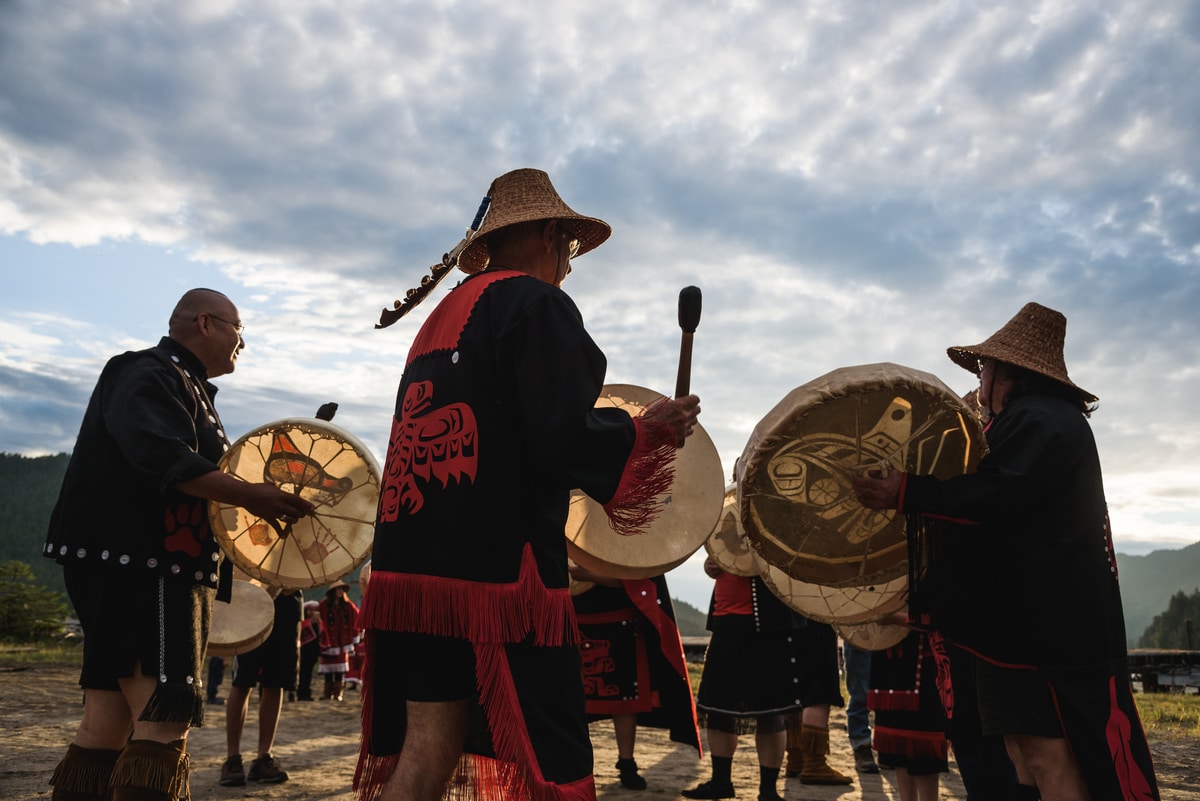
The Skeena and Nass Rivers run through the traditional territories of the Gitxsan, Nisga’a, Tsimshian and Haisla Nations before reaching the Pacific coast and Haida Gwaii, the homeland of the Haida Nation. Along this route, Northern British Columbia holds one of the highest concentrations of accessible Indigenous cultural sites in Canada: living villages, national museums, a UNESCO World Heritage site and artist-owned galleries, many within a day’s drive of each other along Highway 16.
Indigenous culture in Northern BC is not confined to display cases. Carvers still work in longhouses built for that purpose. Communities own and operate the museums that hold their history. Nations host storytelling, ceremony and art in the same territories their ancestors have occupied for thousands of years.
This guide covers nine of the region’s most significant Indigenous cultural experiences and heritage sites, arranged roughly west to east along the Highway 16 corridor: from the Gitxsan village of K’san near Hazelton, through Nisga’a territory in the Nass Valley, to the Tsimshian coast at Prince Rupert, Haisla territory in Kitimat, and the Haida Nation on Haida Gwaii.
In This Guide
- K’san Historical Village and Museum (Hazelton)
- The Nisga’a Valley and Nisga’a Museum
- Nisga’a Memorial Lava Bed Park
- Museum of Northern BC (Prince Rupert)
- House of Sim-Oi-Ghets (Terrace)
- Haisla Heritage at the Kitimat Museum & Archives
- Haida Heritage Centre at Qay’llnagaay (Skidegate)
- Haida Gwaii Museum (Skidegate)
- SGang Gwaay / Ninstints (Haida Gwaii)
- Planning Your Visit
- Frequently Asked Questions
K’san Historical Village and Museum (Hazelton)
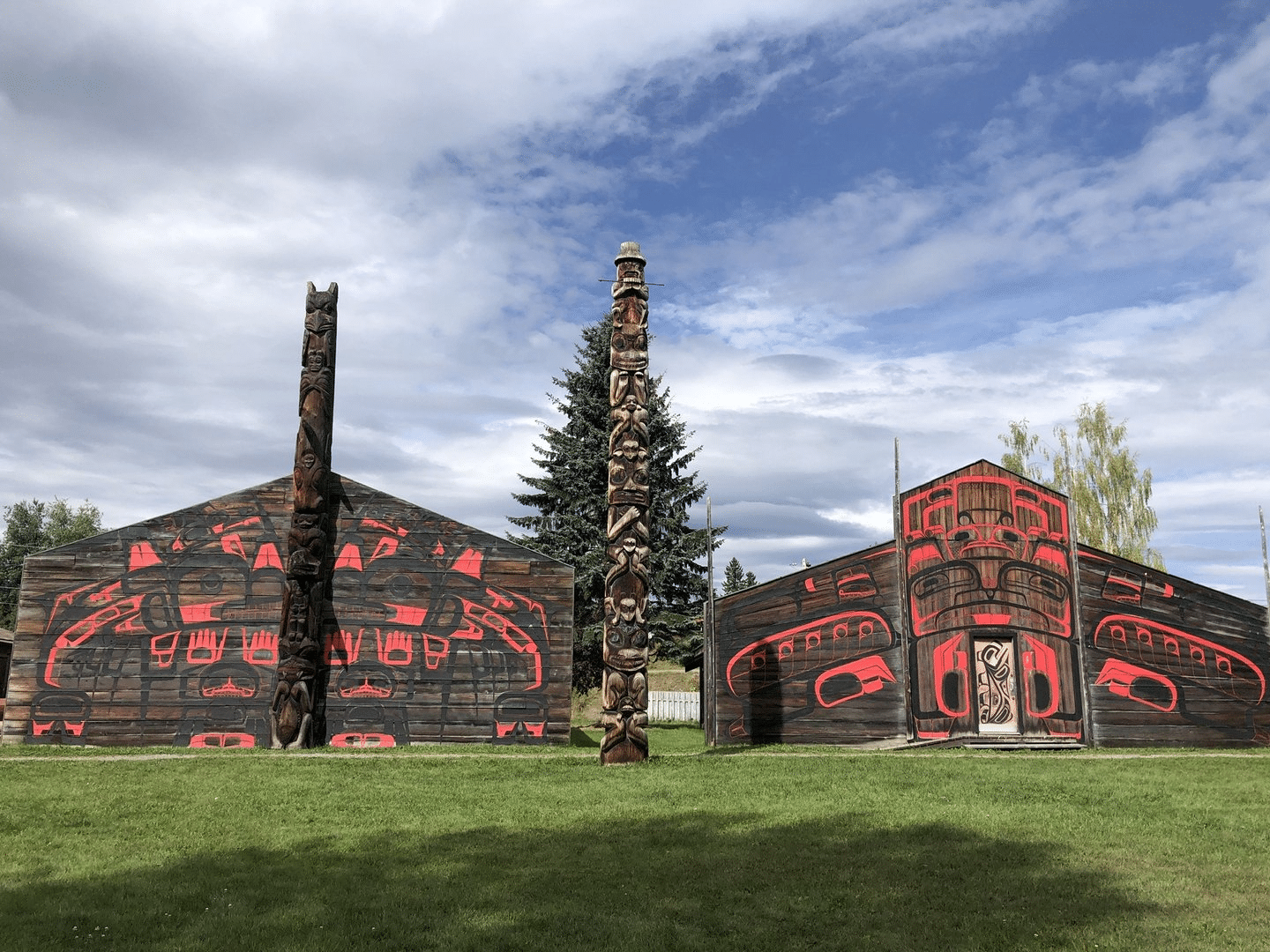
K’san Historical Village and Museum, Hazelton
K’san Historical Village sits on Gitxsan territory at Gitanmaax, where the Bulkley and Skeena Rivers meet near Hazelton. A community museum called the House of Treasures opened here in 1958; Gitxsan artists and elders rebuilt it into a reconstructed village in 1970, and it has operated as a living cultural site ever since.
Traditional-style longhouses face the river in the arrangement Gitxsan communities have used for generations. Carvers work on monumental poles and house fronts on site, and the village holds collections of bentwood boxes, ceremonial masks, button blankets, regalia, and fishing and hunting tools across several longhouses, each built around a different part of Gitxsan life: governance, ceremony and performing arts among them.
K’san connects visitors to the people behind the objects. Every mask and box ties back to a specific family, house and story, and Gitxsan guides carry that context into every tour. Plan your visit to K’san Historical Village and Museum on Art BC.
The Nisga’a Valley and Nisga’a Museum
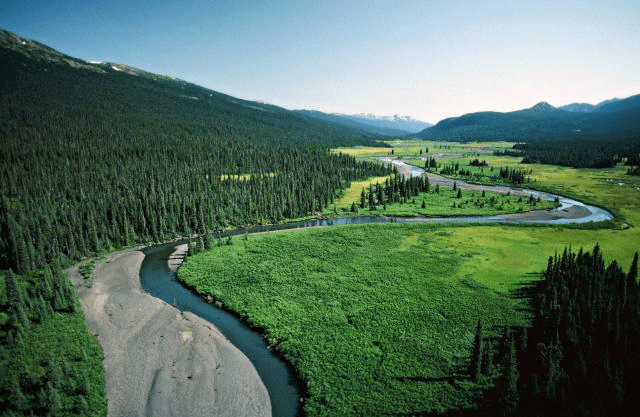
Nisga’a Valley, Nass Valley
The Nass Valley is the homeland of the Nisga’a Nation, a mountainous, volcanic landscape roughly two hours north of Terrace. In 2000, the Nisga’a Nation signed the Nisga’a Treaty, the first modern treaty in British Columbia and one of the most significant developments in Indigenous rights in Canada.
The centrepiece of a Nass Valley visit is the Nisga’a Museum, known as Hli Goothl Wilp-Adokshl Nisga’a, “the Heart of Nisga’a House Crests,” in the village of Laxgalts’ap. The museum opened in 2011 to house the Ancestors’ Collection: more than 300 masks, bentwood boxes, headdresses and other belongings removed from the Nass Valley in the late 1800s and early 1900s and returned to the Nisga’a Nation under the treaty settlement, largely from the Royal BC Museum and the Canadian Museum of History.
Four Nisga’a villages make up the valley today: Gitlax̱t’aamiks, Gitwinksihlkw, Lax̱g̱alts’ap and Gingolx. Each maintains its own art, language and ceremonial life, and together they offer one of Northern BC’s clearest windows into contemporary Nisga’a governance and culture. See the Nisga’a Museum listing on Art BC or discover the Nisga’a communities of the Nass Valley.
Nisga’a Memorial Lava Bed Park
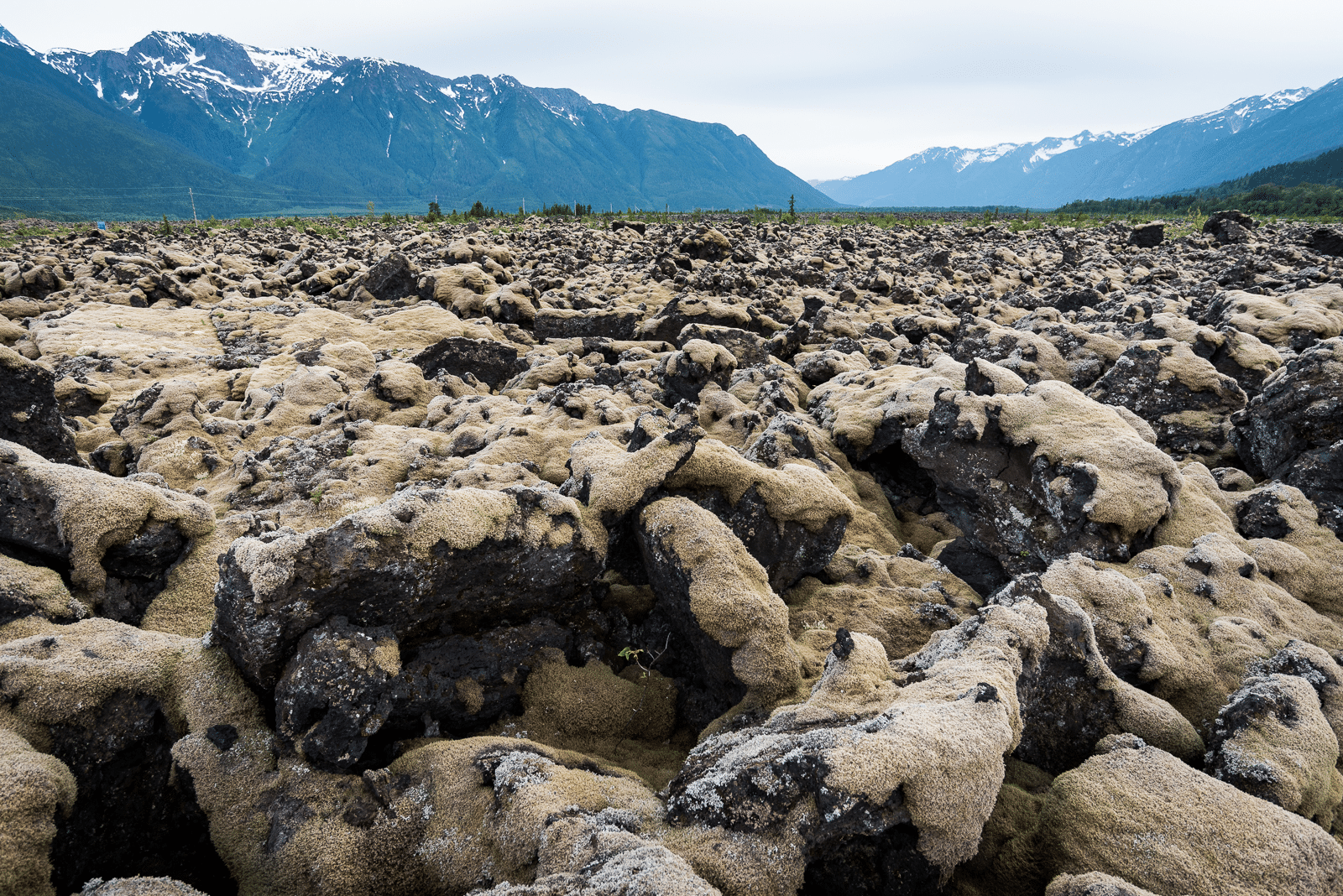
Nisga’a Memorial Lava Bed Park, Nass Valley
Around 1700, the Tseax Cone volcano erupted in the Nass Valley, sending lava roughly 30 kilometres down the valley floor and killing an estimated 2,000 Nisga’a people. It remains the deadliest known natural disaster in Canadian history. Nisga’a Memorial Lava Bed Park now protects the resulting lava field.
The eruption lives on in Nisga’a adaawak, the oral histories that record the event and its causes as part of the nation’s traditional teachings. Interpretive trails lead visitors through the dark volcanic rock alongside the Nass River, with signage that explains both the geology and the Nisga’a account of what happened.
The park makes a direct point: Indigenous heritage in the Nass Valley isn’t confined to buildings. It’s written into the land itself.
Museum of Northern BC (Prince Rupert)
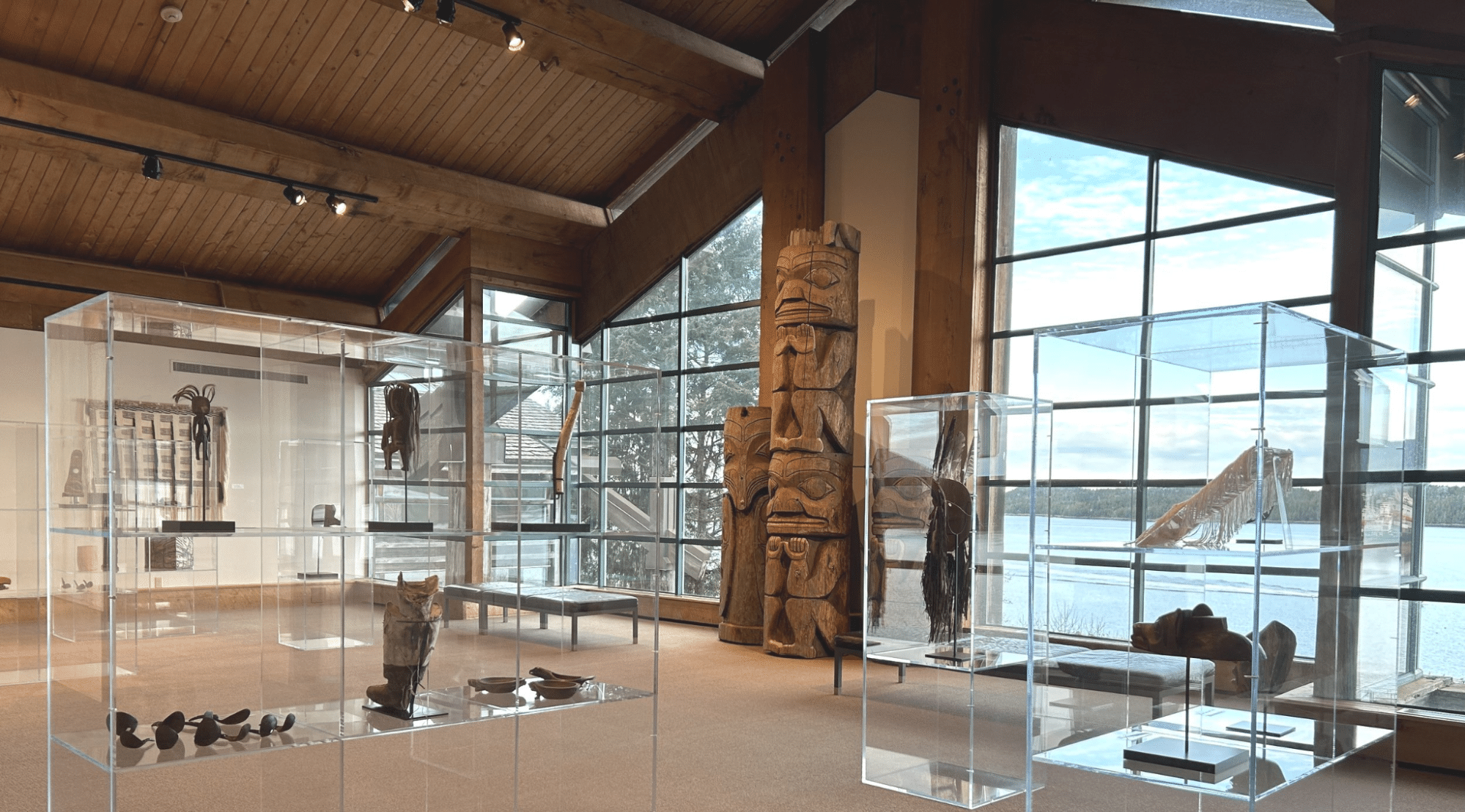
Museum of Northern BC, Prince Rupert
The Museum of Northern BC, founded in 1924, sits on the Prince Rupert waterfront on Tsimshian territory. Its building takes the form of a Northwest Coast longhouse, and its collection spans more than 10,000 years of human history on the North Coast.
Exhibits cover the Tsimshian, Haida, Nisga’a and Gitxsan nations through carved works, masks, baskets and ceremonial belongings, alongside the region’s fur trade, fishing and transportation history. The museum also runs tours to Metlakatla, an ancient Tsimshian village site near Prince Rupert.
For visitors new to Northwest Coast art, the Museum of Northern BC works well as a first stop: it sets up the artistic forms and cultural context that show up throughout the rest of a Northern BC itinerary. Visit the Museum of Northern BC listing on Art BC.
House of Sim-Oi-Ghets (Terrace)
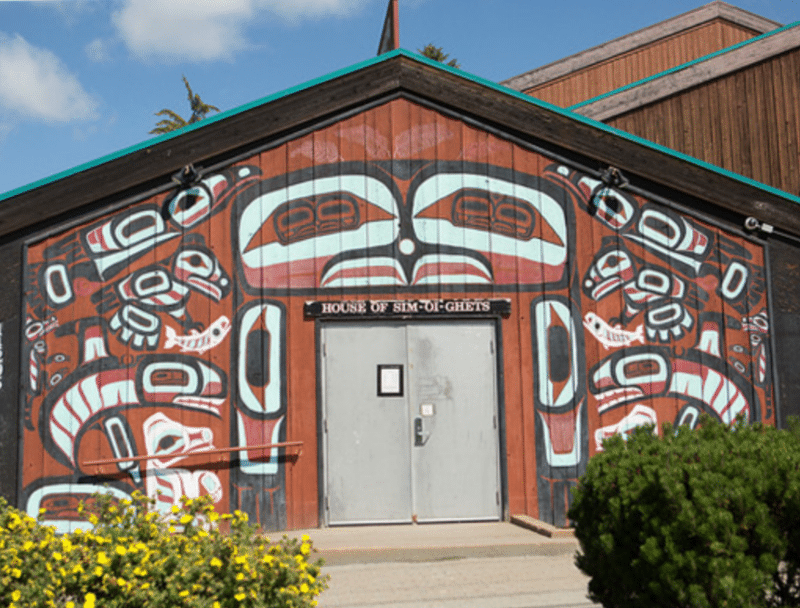
House of Sim-Oi-Ghets, Terrace
West of Terrace in the Kitsumkalum community, the House of Sim-Oi-Ghets has operated as a First Nations-owned store since 1971. Kitsumkalum artists and craftspeople sell traditional and contemporary work here, including carved masks, silver jewellery, cedar bark hats, paddles, drums, prints, photographs and Indigenous-designed clothing.
Artist Freda Diesing designed the current longhouse-style building in the mid-1990s. Its design incorporates the four principal Kitsumkalum crests — Raven, Killer Whale, Wolf and Eagle — with a Robin at the top, and ties directly to the story of the Kitsumkalum people’s settlement in the area.
Buying from House of Sim-Oi-Ghets supports a Kitsumkalum community-owned enterprise directly, rather than a museum collection: it puts Indigenous art inside a living local economy. Find House of Sim-Oi-Ghets on Art BC.
Haisla Heritage at the Kitimat Museum & Archives
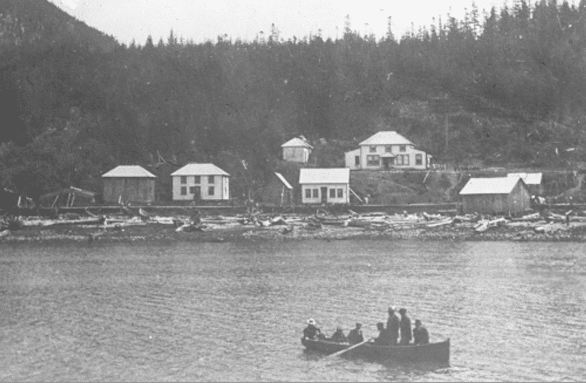
Kitimat Museum & Archives, Kitimat
Kitimat is best known for its aluminum smelter and industrial history, but the Kitimat Museum & Archives presents the area’s much longer Haisla history alongside it. Exhibits cover Haisla traditional arts, technology and cultural belongings next to the story of the modern industrial town.
The contrast matters. Kitimat’s twentieth-century industrial identity sits inside a Haisla cultural landscape shaped by rivers, forests and coastal fjords that goes back far longer, and the museum makes that older history visible. See the Kitimat Museum & Archives listing on Art BC.
Haida Heritage Centre at Qay’llnagaay (Skidegate)
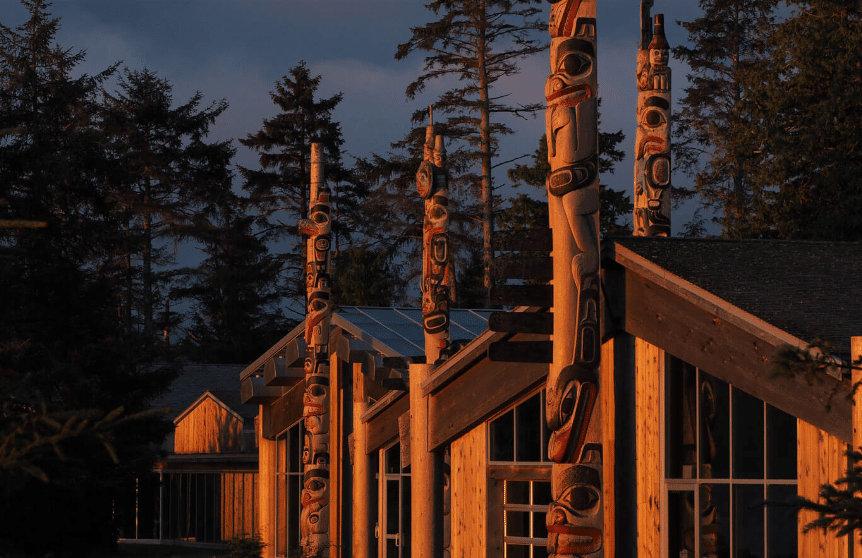
Haida Heritage Centre at Qay’llnagaay, Skidegate
In Skidegate on Haida Gwaii, the Haida Heritage Centre at Qay’llnagaay (also spelled Kay ‘Llnagaay, meaning “Sea Lion Town”) brings together the Haida Gwaii Museum, a canoe house, carving facilities, performance spaces and educational programs in a series of longhouses built on an ancient village site.
The centre houses Loo Taas, the Haida canoe carved under the direction of artist Bill Reid, and runs daily pole, canoe and weaving tours from June through August. It also serves as the required orientation point for Gwaii Haanas National Park Reserve: every visitor completes a briefing here before entering the park.
The Haida Heritage Centre connects historic and contemporary Haida culture directly, putting traditional art forms in the same spaces where present-day Haida artists and carvers continue to work. Visit the Haida Heritage Centre at Qay’llnagaay on Art BC.
Haida Gwaii Museum (Skidegate)
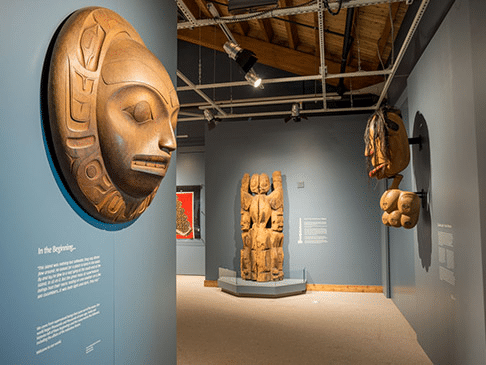
Haida Gwaii Museum, Skidegate
Also housed within the Haida Heritage Centre in Skidegate, the Haida Gwaii Museum holds Haida knowledge, archaeology, art and contemporary work spanning the nation’s full history.
Cultural repatriation runs through the museum as a central theme. Objects once removed from Haida communities are being returned and reconnected with the families and places they belong to, and the museum documents that process alongside its permanent collection.
Contemporary exhibitions make the point directly: Haida culture isn’t a historical subject. Artists, carvers, educators and community leaders continue to interpret and renew Haida traditions for new generations. See the Haida Gwaii Museum listing on Art BC.
SGang Gwaay / Ninstints (Haida Gwaii)
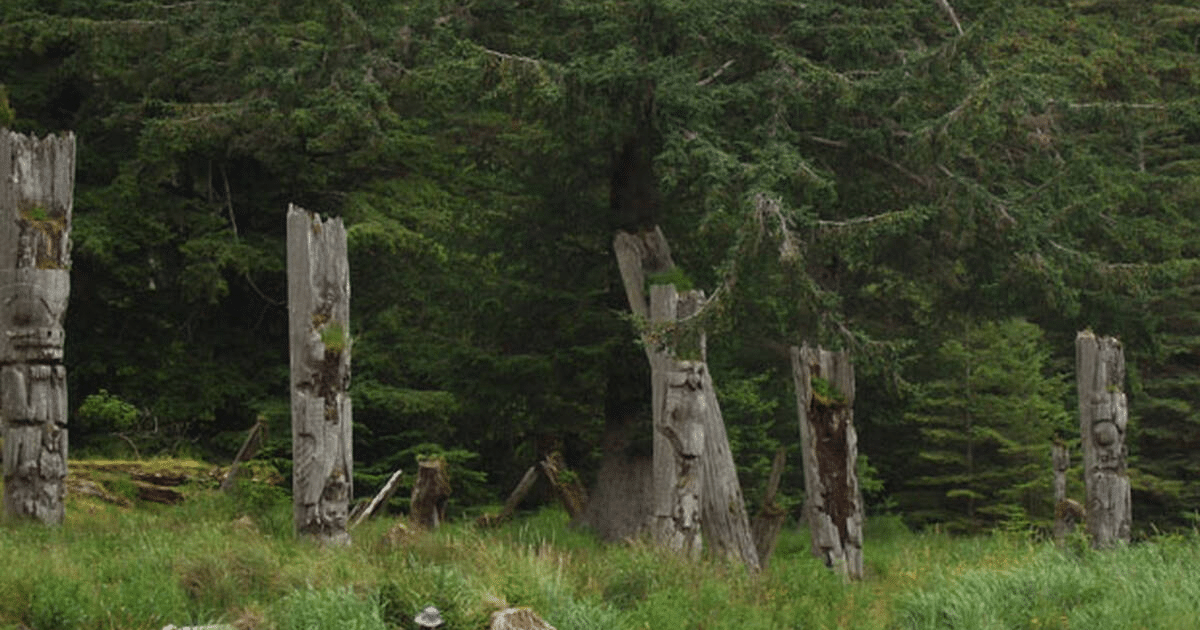
SGang Gwaay, Haida Gwaii
SGang Gwaay, also known as Ninstints, is a Haida village site on Anthony Island in the southern part of Haida Gwaii. UNESCO designated it a World Heritage Site in 1981, and it holds the largest collection of standing Haida totem poles still in their original village setting anywhere in the world.
The Haida Gwaii Watchmen Program stations Haida guardians at SGang Gwaay from May through September to protect the site and guide visitors through it. Access is by boat or float plane only, through Gwaii Haanas National Park Reserve, and every visitor completes a mandatory orientation at the Haida Heritage Centre in Skidegate before entering the park.
Unlike a reconstructed village or museum, SGang Gwaay puts visitors inside an original Haida village landscape. The ocean, forest and shoreline are still part of the story, not a backdrop to it. Art BC does not currently list an individual page for this site; plan a visit through Gwaii Haanas National Park Reserve (Parks Canada), which co-manages the site with the Haida Nation.
Planning Your Visit
Most of these sites cluster along two routes: Highway 16 (the Yellowhead Highway) between Hazelton and Prince Rupert, and Haida Gwaii, reached by ferry from Prince Rupert or by air. Budget at least two to three days for the mainland sites and a separate two to three days for Haida Gwaii, since SGang Gwaay and Gwaii Haanas require boat or float plane access and advance booking.
June through August is the most reliable season. House of Sim-Oi-Ghets, the Haida Heritage Centre and SGang Gwaay all run their fullest hours and tour schedules in summer, and the Haida Gwaii Watchmen are only stationed at SGang Gwaay from May to September.
Every site on this list is owned or co-managed by the Indigenous nation whose history it tells. Booking tours directly through the museums and community-owned businesses listed here puts visitor spending directly into those communities. See more of the region on the Art BC Northern BC hub.
A Journey Through Living Culture
At K’san, the Skeena and Bulkley Rivers set the stage for Gitxsan history. In the Nass Valley, volcanic terrain carries the Nisga’a story forward. In Prince Rupert, Tsimshian heritage anchors the North Coast. Around Terrace, Kitsumkalum artists keep that heritage inside a working economy. In Kitimat, Haisla history runs alongside a modern industrial town. And across Haida Gwaii, museums, carvers and an original village site carry Haida culture forward together.
Northern BC turns these histories into something visitors walk through, not something they read about afterward. The rivers, mountains, forests and ocean aren’t scenery around the story. They are the story.
Frequently Asked Questions
What is the best place to learn about Indigenous culture in Northern BC?
K’san Historical Village near Hazelton and the Museum of Northern BC in Prince Rupert are the two most complete starting points. Together they cover Gitxsan, Tsimshian, Haida and Nisga’a history and art in a single visit each.
Where can I see original Haida totem poles in their original location?
SGang Gwaay (Ninstints) on Haida Gwaii holds the largest collection of standing Haida totem poles still in their original village setting, protected as a UNESCO World Heritage Site inside Gwaii Haanas National Park Reserve.
What is the Nisga’a Museum known for?
The Nisga’a Museum in Laxgalts’ap holds the Ancestors’ Collection, more than 300 Nisga’a cultural belongings returned to the Nass Valley through the Nisga’a Treaty after being removed from the region generations earlier.
How do I visit SGang Gwaay?
SGang Gwaay is accessible only by boat or float plane through Gwaii Haanas National Park Reserve. Every visitor must complete a mandatory orientation at the Haida Heritage Centre in Skidegate before entering the park.
What caused the landscape at Nisga’a Memorial Lava Bed Park?
A volcanic eruption at Tseax Cone around 1700 sent lava roughly 30 kilometres down the Nass Valley and killed an estimated 2,000 Nisga’a people, making it the deadliest known natural disaster in Canadian history.
Can I buy Indigenous art directly from artists in Northern BC?
Yes. The House of Sim-Oi-Ghets near Terrace is a Kitsumkalum-owned store selling traditional and contemporary Indigenous art directly from local artists and craftspeople.
